
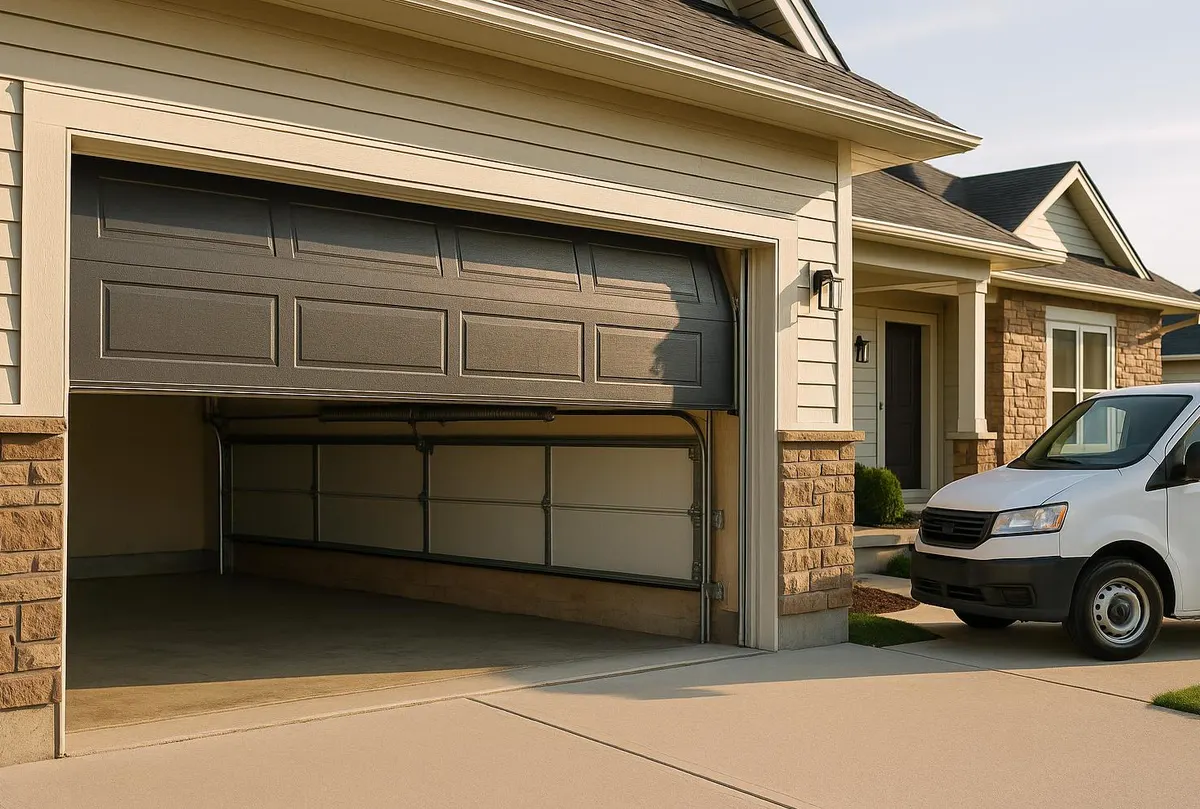
Skip garage door maintenance this fall and the bill doesn't disappear — it just waits for a worse night to show up. A spring that's been quietly rusting since July doesn't fail on a calm Tuesday afternoon; it fails when a cold front rolls through with gusty wind and the door is working hardest. A sensor knocked out of alignment during an October downpour doesn't announce itself until the door reverses on your car, or won't close at all while you're standing in the rain. Waiting until something breaks usually means an after-hours service call instead of a routine tune-up, and a door that's been struggling for months is more likely to take an opener motor or a cable down with it.
What a Season of Heat and Humidity Leaves Behind
Months of thick, salty, humid air do real damage even if the door still looks fine from the driveway. Wood and composite panels absorb moisture and swell, which is why doors that closed easily in spring start dragging or binding at the bottom in late summer. Weatherstripping along the bottom and sides softens, compresses, or tears from constant expansion and contraction. If you're near the coast, salt air accelerates rust on hinges, rollers, tracks, and spring coils — rust you may not notice until it's already weakening the metal. Check the bottom seal for flattening or cracking, run a hand along the tracks for pitting or flaking rust, and look at hinge pins for orange residue or stiffness when the door moves.
Hurricane Season Isn't Over Yet — Check These First
Storm season in this part of Florida runs well into fall, so winter prep has to start with a storm-readiness check, not skip it. Reinforcement struts, track bracing, and the header connection all take stress during high wind events, and a door built or retrofitted to wind-load standards can still shift slightly after repeated gusts. After any named storm or strong squall line, walk the perimeter of the door and check for:
- Visible gaps between the door and the frame that weren't there before
- Tracks pulled slightly away from the wall, even a quarter inch
- Photo-eye sensors knocked out of alignment by wind-driven debris or just vibration
- Water staining at the bottom corners, which points to a seal that's no longer doing its job
If your opener has a battery backup, test it now rather than during the next outage. A dead backup battery is a problem you only discover at the worst possible moment.
Getting Ahead of the First Cold Snaps
Winters here are mild, but the first real cold front still causes problems for a door that's spent months swelling in the heat. Metal contracts, lubricant that was fine in August can thicken or dry out, and a door that was dragging from humidity in July can suddenly feel loose and noisy once things cool and dry out. This is the right window to:
- Lubricate rollers, hinges, and the spring with a silicone-based or garage-door-specific lubricant, not household oil, which attracts grit
- Replace weatherstripping that's cracked, flattened, or pulling away from the bottom bracket
- Test the door's balance by disconnecting the opener and lifting it halfway by hand — it should hold its position, not drop or shoot upward
- Inspect cables and spring coils closely for rust pitting, fraying, or uneven tension, since corroded springs are far more likely to snap under cold-weather stress
- Tighten any loose hardware on tracks, hinges, and the opener rail that worked loose from a season of use
A Quick Fall Checklist
- Clean and inspect tracks for rust and debris buildup
- Check weatherstripping and bottom seal condition
- Lubricate moving hardware
- Test auto-reverse and photo-eye sensors
- Check spring and cable condition for rust or wear
- Confirm opener battery backup is holding a charge
When to Call Pensacola Garage Door Service
If you spot rust on the springs, a door that's noticeably off-balance, or sensors that won't stay aligned no matter how many times you adjust them, that's past the point of a DIY fix. Our Garage Door Maintenance visits cover a full inspection of springs, cables, tracks, and hardware, plus lubrication and adjustments that catch problems before a cold front or the tail end of storm season turns them into a breakdown. If a spring has already failed or rusted through, our Spring Replacement service gets it swapped out and properly tensioned the same day, so you're not stuck with a door that won't open — or worse, one that comes down hard.
Whether you need a seasonal check-up, local garage door repair, or a technician who knows what coastal weather does to tracks and springs, Pensacola Garage Door Service covers Pensacola, Gulf Breeze, Pace, Milton, Navarre, Cantonment, Perdido Key, and Ferry Pass. Call today to get your garage door ready before the next front rolls through.