
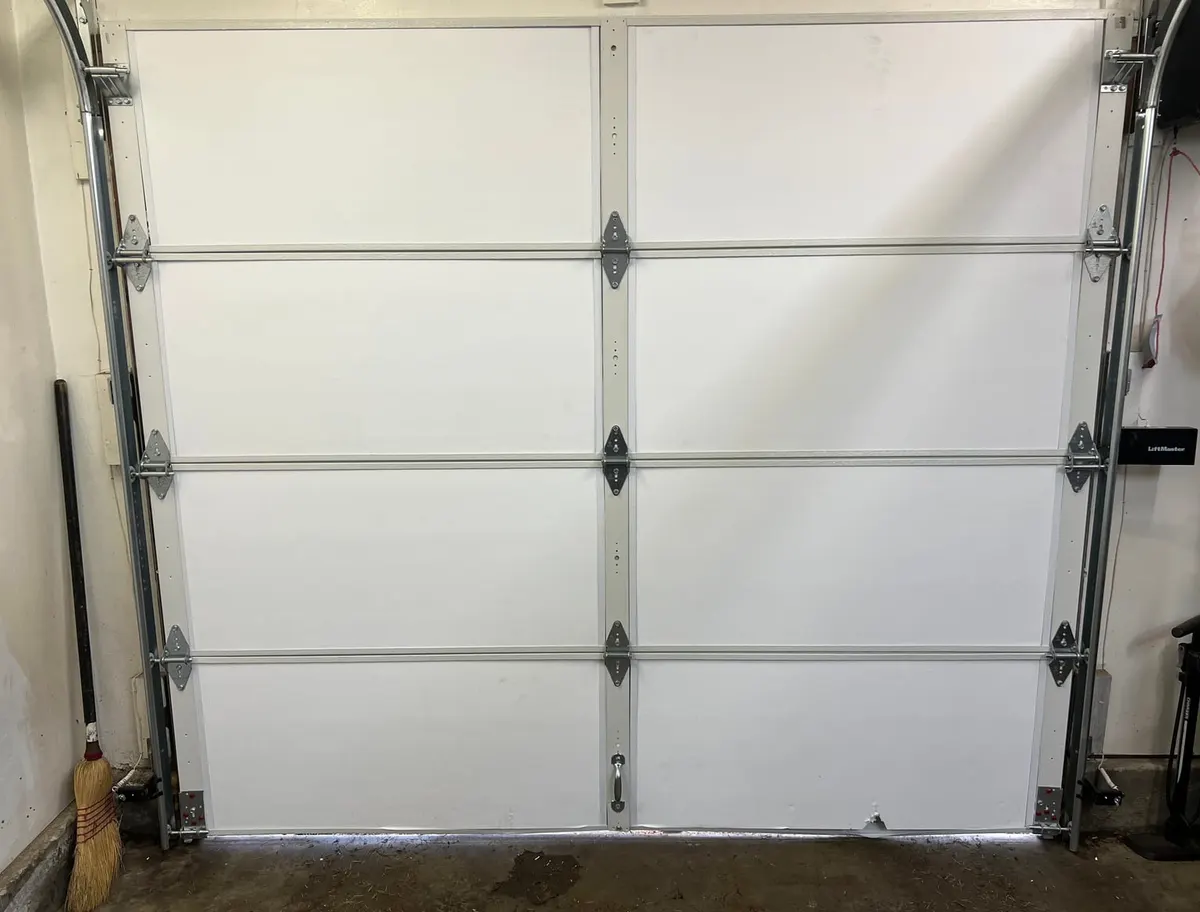
The Rule of Thumb
If you're turning the garage into livable space, the door has to be treated as an exterior wall, not just a doorway you open twice a day. That one shift in thinking answers most of the arguments couples have about insulation, keeping the door operable, or sealing it off for good.
The exceptions matter, though. If the space is still going to double as overflow parking, a place to stash a boat trailer during hurricane season, or storage you want quick access to, you keep the door fully functional and build the room around that reality. If it's a dedicated home gym or workshop that will never see a car again, you have more freedom to insulate heavily, add a mini-split, or even consider walling the opening permanently.
What Actually Changes When You Convert the Space
A garage door and opener are built around a specific assumption: the space behind them is unconditioned, ventilated, and mostly empty except when a car's in it. Change any of those assumptions and parts start working harder than they're rated for.
- Added weight. Insulated panels, drywall backing, or a second layer of insulation board all add mass. Standard torsion springs are sized to the door's original weight. A heavier door on old springs will slam down fast, strain the opener, and wear out cables sooner.
- Trapped humidity. Gulf Coast air is humid most of the year, and a sealed-up former garage with no airflow traps moisture against the metal track, hinges, and springs. That's a fast track to rust, especially if the space is anywhere near salt air.
- Condensation on drywall. If you finish the walls but don't address the door's thermal gap, moist air hits the cold metal door and condenses, which shows up as damp spots or mildew smell near the door opening.
- Vibration. Gym equipment, especially anything with a motor or repeated impact, shakes the whole structure. Loose track brackets and worn rollers get worse fast under that kind of vibration, and you'll hear it as rattling every time the door moves.
- Electrical load. Adding lighting, a mini-split, or shop tools to the same circuit as the opener invites nuisance trips or a sluggish opener that strains under low voltage.
What to Actually Do About It
Weatherstripping and a proper door seal matter more than most people think. A worn bottom seal or gapped side weatherstripping lets in humid air, bugs, and the occasional afternoon downpour spray, undermining whatever insulation work you did on the walls. Replace it before you finish the interior, not after.
If you're switching to an insulated garage door for comfort, get the springs checked and likely upgraded at the same time. A heavier door on the wrong springs isn't just inconvenient, it's a safety issue, since the door won't hold position if a cable or spring fails under load it wasn't rated for.
Keep some airflow even in a sealed conversion. A small vent, a dehumidifier, or simply running the mini-split enough to control humidity will do more to protect the hardware than any amount of caulking.
If the door stays operable, don't skip maintenance just because the car's not in there anymore. Rollers, hinges, and the opener chain still need lubrication on a regular schedule. A door that only moves once a week is more likely to surprise you with a seized part than one that moves daily, because corrosion has more time to set in between uses.
One More Thing Worth Settling
Even if you never plan to park in there again, keep in mind that a garage door opening still needs to meet wind-load expectations common to this area if the structure is still identified as a garage on paper. That's less about the door working day-to-day and more about what happens to resale value and insurance conversations down the road. Worth a conversation before you make the change permanent.
When to Call Pensacola Garage Door Service
If you're upgrading to an insulated door for a gym or workshop conversion, call us for Garage Door Installation so the new door, springs, and opener are matched correctly from the start instead of patched together. If you're keeping your existing door but it's starting to sag, rattle under equipment vibration, or show rust from trapped humidity, our Garage Door Maintenance service catches those issues before a spring or cable fails under the added load.
If you're in Pensacola, Gulf Breeze, Pace, Milton, Navarre, Cantonment, Perdido Key, or Ferry Pass and you're mid-argument about what to do with that garage, give us a call. We'll take a look, tell you straight what the door and opener can handle, and get it set up right for whatever the space is becoming.